

What is Assessment in Education?
Assessment in education is the process of collecting and assessing the information concerning the knowledge, skills, understanding, and progress of learners. It assists teachers, trainers, and institutions in making informed decisions regarding teaching processes, learner assistance, and the effectiveness of the entire educational process.
Assessment is not just about the testing of knowledge, but rather, it is an identification of learning requirements and improving the teaching practises. In professional learning settings, such as assessment training, it is crucial to help the learner achieve the required standards and exhibit skills in the real world.

Why Assessments Matter in Learning
Effective education and training are based on assessments. They enable the instructors to assess the level of comprehension and practical skills of students to know what they have learned. It is a process that is perpetuated to make education learner-centred as it is geared toward growth and improvement as opposed to memorisation.
For learners, assessment is used to show their strengths and areas of improvement so that they are motivated, gain confidence and make measurable progress. To teachers and employers, they offer comprehension on skill development, job preparation, and training efficiency – and therefore are critical to academic and career accomplishment.

Types of Assessment
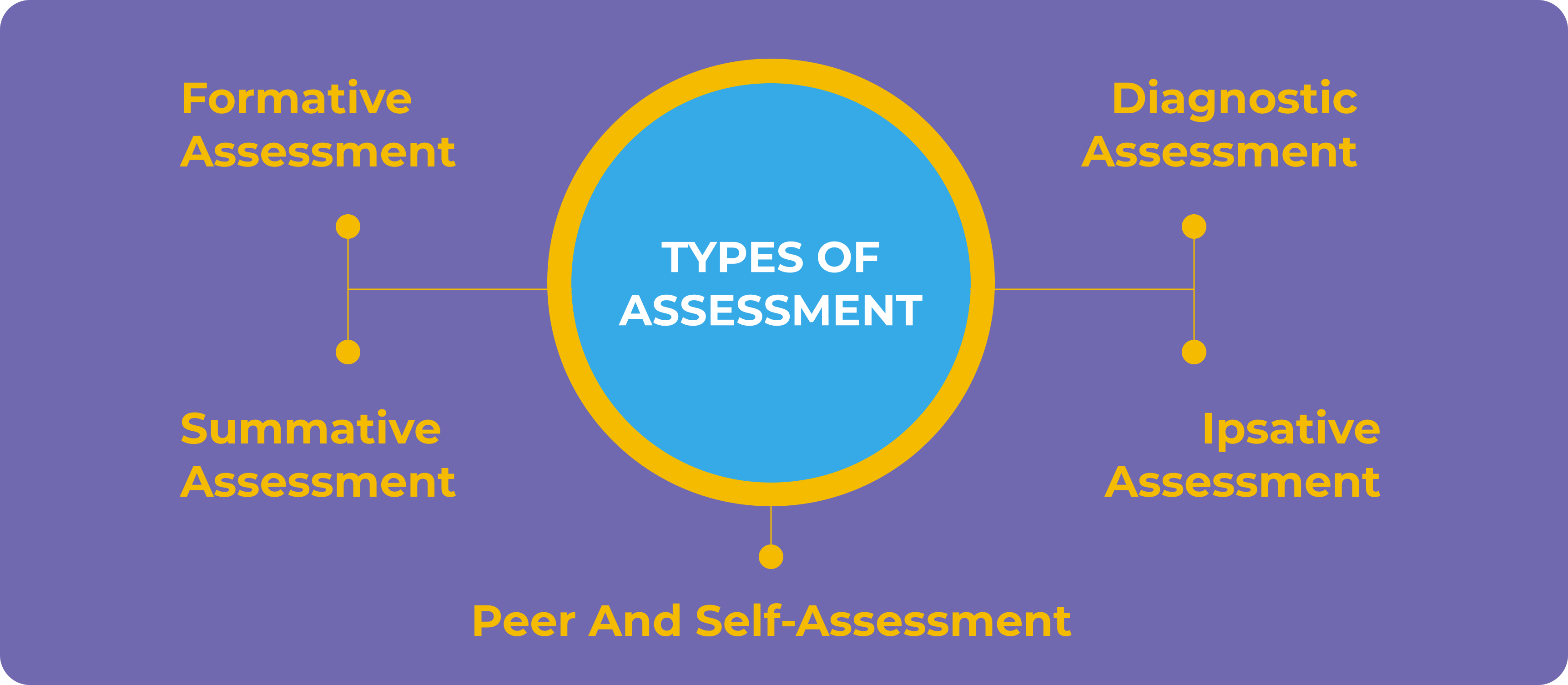
There are so many types of assessment, and each type has its special role in measuring the performance and progress of the learners. The major types of education assessments are formative, summative, diagnostic, ipsative, and peer/self assessment techniques. Their combination helps them form a whole framework that assists in teaching as well as learning.
To determine how these types of academic assessment aid successful education, we will discuss each of these types of academic assessment, their purposes, and advantages below.
Formative Assessment
Formative assessment is an ongoing task that is carried out throughout the learning process. It can aid instructors in tracking student learning, assessing them, and making corrections to enhance knowledge and achievement. This kind of evaluation is aimed at bettering learning and not merely a results measurement.
Purpose
Formative assessment is primarily aimed at discovering learning gaps in their early stages and helping learners eliminate them. It helps learners to be more active, reflective, and self-aware, which makes them more engaged and motivated.
Benefits
- Promotes the consistent improvement
- Helps teachers modify teaching plans on the fly
- Encourages confidence in the learners via effective feedback
- Favours individualised learning
Summative Assessment
Summative assessment takes place when a course, module, or term is over. It assesses the overall performance and understanding of the learner according to the pre-established criteria or learning outcomes. Examples may be final examinations, end-of-term projects, or professional competency testing.
Purpose
Summative assessment is done to identify whether learners have achieved the goals of a course or training programme. It is objective and offers quantifiable outcomes to be utilised in certification, progression, or performance benchmarking.
Benefits
- Gives a definite representation of the learning accomplishments
- The effectiveness of the programme is evaluated by helping institutions and employers
- Encourages students to bring together and put knowledge into practise.
- Gives a reasonable point of reference in terms of academic or professional appreciation
Diagnostic Assessment
The diagnostic assessment is conducted prior to starting teaching. It aims at assessing the previous knowledge of a learner as well as their skills and abilities in order to determine the strengths and weaknesses. This information is taken by teachers to design lessons that address the needs of individuals.
Purpose
Diagnostic assessment is meant to establish an initial point of successful teaching. It makes the learning environment adaptable to the needs of each learner, which allows for a more successful engagement and results.
Benefits
- Determines knowledge and skills gaps
- Assists in coming up with individual learning plans
- Conserves time by prioritising areas that need improvement
- Builds the confidence of the learner by establishing attainable objectives
Ipsative Assessment
Ipsative assessment is a personalised process where the current performance of a learner is actively compared to their previous performance, as opposed to comparing it to the other learners. It is aimed at personal self-development that promotes self-improvement and contemplation.
Purpose
The primary goal of ipsative assessment is to encourage personal growth and self-improvement. It is inspirational as it makes the learners realise their own improvements with time.
Benefits
- Promotes personal reflection and self directed learning
- Emphasis on self development as opposed to rivalry
- Helps to achieve long term learning
- Develops personal drive and self-confidence
Peer and Self-Assessment
Peer and self-assessment techniques enable the learner to engage in the process of assessing their own work and others as well. These tests establish critical thinking, self-evaluation, and feedback abilities that are vital in lifelong learning.
Purpose
These assessments are aimed at encouraging teamwork and self-knowledge. The learners also analyse the progress they have made, know how they will be evaluated, and learn to give constructive feedback to peers.
Benefits
- Encourages participation and interaction
- Enhances interpersonal skills and communication
- Promotes self-initiative among learners
- Helps in professional skills and holistic assessment
Role of Assessment in Supporting Learners and Employers
Evaluation systems offer a close relationship between learning and work. To learners, they enhance confidence, responsibility, and competence. To the employers, the assessment option make sure that these individuals are skilled, employment-ready, and able to perform as per the expectations in the workplace.
Knowing the types of assessment will help trainers and assessors establish equitable, consistent, and responsible learning environments that will foster academic and workforce development.
To know more about our training programme or to be guided on assessment qualifications, contact info@educationschool.co.uk or visit The Education School to be expertly assisted.