
What is an Initial Assessment?
Initial assessment is the procedure that should be conducted at the start of a learning programme to identify the current skills, knowledge, experience and support needs of a learner. When teachers say, What is an initial assessment? They are talking about an organised method that assists in determining launch points prior to the commencement of teaching. It serves as a basis of personalised learning and makes sure that each learner receives an appropriate degree of difficulty and support.
Initial assessment, unlike mid-course or final assessment, is diagnostic. It does not criticise the performance of a learner but rather assists educators to know who the learner is, the way he/she learns and what gaps should be filled. This process is necessary whether it is done by a teacher or a trainer or even an Assessor to organise good and inclusive learning experiences.

Purpose of Initial Assessment in Education
Initial assessment is mainly aimed at making sure that the learners are enrolled in a suitable course or programme in accordance with their abilities and objectives. Initial assessment in education allows teachers and assessors to obtain valuable information that may influence pedagogical practises, plan the lesson, and interventions.
The other notable purpose is to build a foundation upon which progress can be evaluated. One can hardly plan meaningful learning journeys or monitor the progress unless they know the starting point of a learner. A strong first assessment will thus help to achieve better results in learning, engagement, and confidence of the learners.
What is Assessed During an Initial Assessment?
In the preliminary evaluation, the teacher or instructor would strive to create a clear and balanced perception of a learner prior to the actual teaching process. This process enables the Assessor to know the starting point of the learner, his/her strengths, knowledge gaps and the kind of assistance the learner might need, as opposed to making assumptions. With the help of such information, instructors are able to develop individual learning trajectories that help to enhance learners’ engagement and their achievements.
The initial assessments are not only measured through academic knowledge but also through a variety of variables that determine how a learner approaches learning. This holistic method enables learners to be at the right level of learning and also have the resources that they need to excel in their course.

Previous Knowledge and Skills
Identifying what the learner already knows is one of the major objectives of the initial assessment. Assessors can also use diagnostic tests, interviews or skill based tests to determine knowledge of subjects such as English, Maths or even vocational skills. Knowing the level of competence will help place learners on the right course level, avoid burdening or under-challenging learners.
This step also determines the transferable skills obtained from work experience, volunteering and any other previous qualifications. These are useful in customising the teaching approach and allowing the learners to relate the new ideas to the old ones.
Learning Styles
The other important element is analysing the ways that learners like to be informed and process information. There are students who learn by the visual representation and those students who learn better by discussion, practical works or reflective activities. The early determination of the learning styles will enable the teacher to apply a technique that will be of natural preference to the learner.
At an early stage, educators can implement changes in the teaching practises to make them more encouraging, less intimidating, and generally better to increase performance. This is helpful in various classrooms where learners have different backgrounds and capabilities.
Motivation and Goals
Motivation of learners is very important to determine progress. The first evaluations look into what motivates the learner- be it career growth, personal interest, promotion or acquisition of new skills. It is also at this level that learners can determine their long term objectives, including graduating with a qualification or advancing to higher education.
These motivations make learners interested in the learning process, and thus knowing them assists educators in creating meaningful learning experiences that can be enjoyable to the learners. It also makes the course structure in line with the personal aspirations that they have and this makes the learning process more meaningful.
Learning Needs and Support Requirements
A critical aspect of assessment is aimed at determining the assistance that the learners might need. This will also encompass other learning requirements like dyslexia, ADHD, language barriers or physical and mental health factors. Identifying those needs at an early age can provide access to the proper help in time, which can be either additional tutoring, special resources, or even direct classroom support.
This step is not merely academic assistance, but real-world issues, like time, childcare, employment, etc. can be discussed. By handling these needs at an early stage, it will make the learning process much easier and more open.
Types of Initial Assessment
Primary assessments may be of different kinds, and it depends on the learning setting, subject, and level of study. There are three categories of assessment that are mostly utilised when considering the kind of initial assessment.
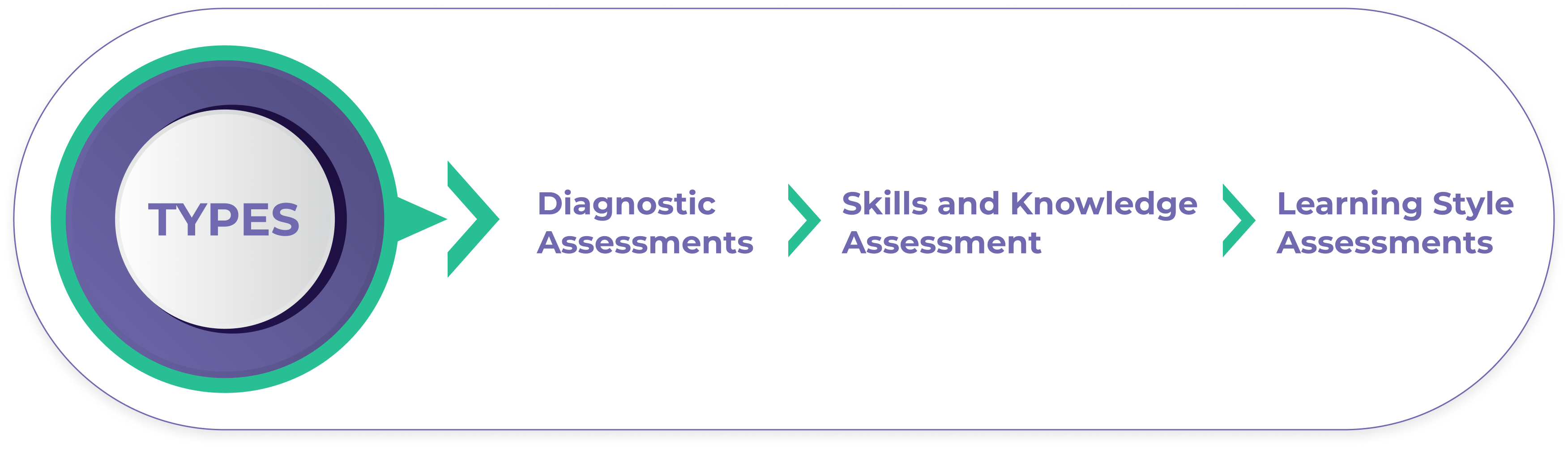
Diagnostic Assessments
The diagnostic assessment determines the strengths, weaknesses and gaps in knowledge prior to the commencement of formal learning. They are frequently applied in literacy, numeracy, and vocational training in order to know what support the learner might need.
Skills and Knowledge Assessment
These tests are an evaluation of the past experience or knowledge of the subject of a learner. In the case of a learner undertaking a technical training course, one of the evaluations that he/she might undertake is a practical assessment to show their current skills.
Learning Style Assessments
These assessments examine the way a learner would like to receive information, which is visually, audibly, reading/writing or kinaesthetically. Knowledge about learning preferences is useful in enabling educators to customise the teaching strategies.
How are Initial Assessments Carried Out?
Initial assessments are conducted through a combination of methods that assist a teacher in creating a comprehensive profile of a learner. These can be written tests, interviews, online tests, practical observation and even informal talks. It is also important to understand the background of the learner, his or her motives and educational needs rather than marking the performance.
Teachers normally utilise digital applications, questionnaires, and hands-on activities to find the correct information. The Assessor can also examine past qualifications, work experience, and their personal ambitions to make sure that the learning programme suits the learner in his or her career. Through various techniques, assessors are able to create a fair, inclusive and supportive assessment process that appreciates the individuality of each learner.

Why Initial Assessment Matters for Learners
First evaluation is important as it prepares the learners for success even at the start. Through the determination of the levels of skills and the areas of learning, teachers are able to avoid instances of falling behind or being overwhelmed by the learners. It makes sure that learners are adequately supported, be it in their literacy, numeracy, study skills or confidence building.
The other significant purpose why initial assessment should be considered is that it makes learners feel perceived, appreciated, and comprehended. Learners will be better motivated and involved when a learning programme is based on their goals and abilities. This customised strategy fosters favourable learning experiences, an increased level of achievement and enhanced levels of progress.
Strengthening Learning by Effective Initial Assessment
A good initial assessment goes beyond simply determining where the learners are; it provides the basis upon which a well planned and purposeful learning process can be established. Being applied appropriately, it informs curriculum design, increases lesson quality, and enhances the learning process in general. Some of the ways it enhances learning are as follows:
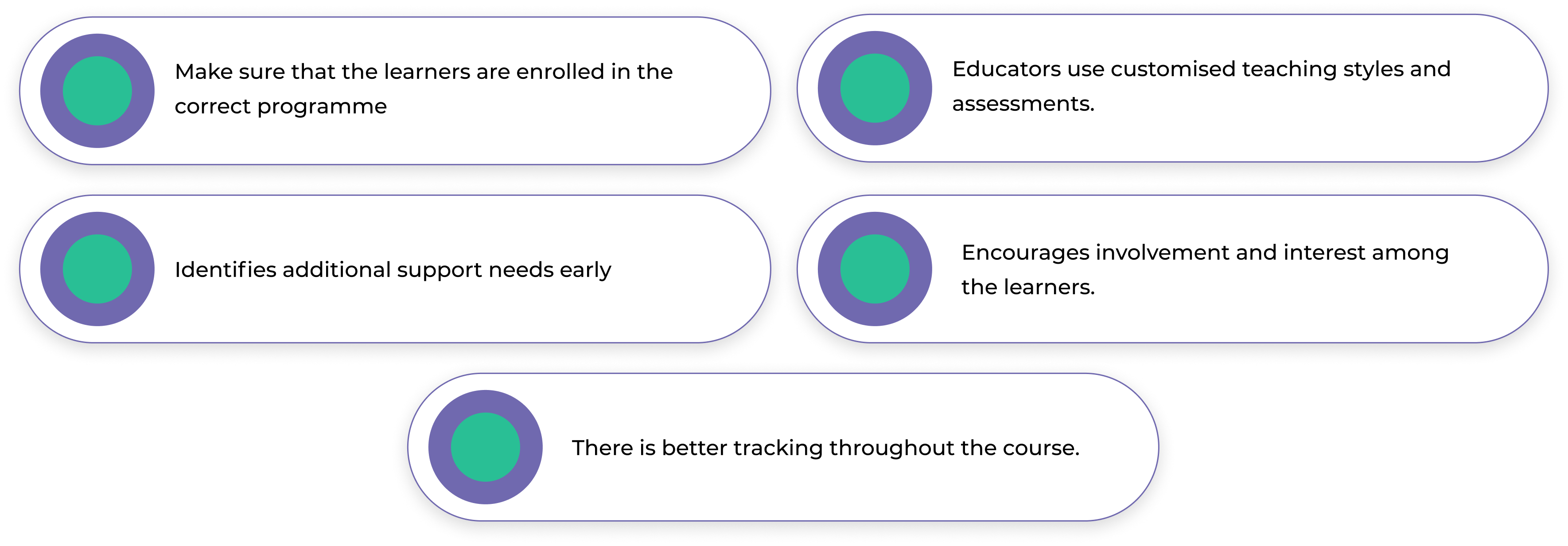
Through the constant encouragement and the quality of teaching, preliminary evaluation is an effective tool for effective educational growth. It is the initial movement towards a successful and structured course of learning, both to the teacher and the pupil, and is thus vital for education and instruction in the present-day society.