

Formative assessment is a critical component of the modern educational system, as it defines how teachers create the vision of the learning requirements of their students and how learners can take the initiative of their own learning. Formative assessment is designed to enhance the learning process, unlike traditional tests, which can only assess what the students have already learned.

What is Formative Assessment?
Formative assessment is an assessment method in which educators gather information concerning student understanding, which is utilised in the improvement of learning and teaching strategies in real-time. This method of assessment is utilised by educators to discover the learning gaps and give particular feedback so that the students can fix the gaps before the final assessment.
In the context of formative assessment education, the given approach can include quizzes, in-class discussions, observation, and short written assignments. It is based on learning development and not performance evaluation. Teachers can be trained on assessments to be able to develop formative strategies that are effective in improving classroom engagement and student motivation.

Purpose of Formative Assessment
Formative assessment is more about improving learning in the process and not evaluating the learning after the process. Formative assessments assist teachers in obtaining information about the way students are comprehending the new concepts and adjust their teaching methods. This will facilitate early intervention so that all learners will remain on course.
Moreover, formative assessments enable the learners to gain self-awareness through finding their strengths and weaknesses. It makes them look back at their performance, peer learn and have realistic academic goals. Formative assessments, in this way, render learning more meaningful and personalised.
Formative vs. Summative Assessment
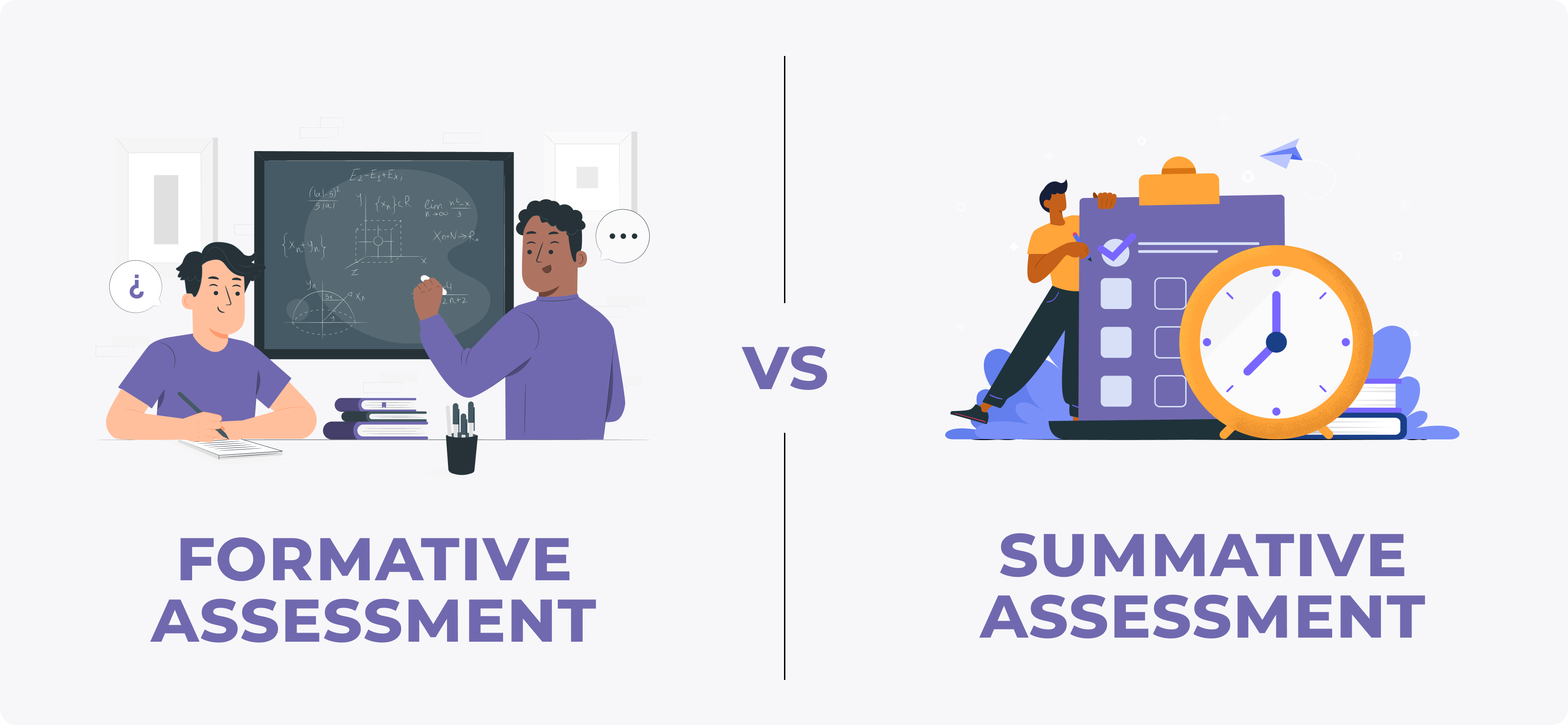
When teaching formative assessment, you should have an idea of the difference between formative and summative assessment. Formative assessments are carried out as a learning process, but summative assessments occur at the completion of a learning cycle in order to measure general success.
Formative assessment is focused on growth and progress and summative assessment is focused on outcomes and achievement. An example of this is weekly quizzes, discussions or draft reviews are formative, and final exams or end-term projects are summative. The two types of assessments are complementary to one another as they help in a comprehensive assessment strategy that helps in long-term learning accomplishment.
Benefits for Students and Educators
The benefits of formative assessment to both students and teachers are numerous. In case of students, it enhances their participation, instils responsibility and builds confidence. With feedback, knowledge, and positive reinforcement, the learners will be able to learn complex subjects slowly without the pressure of exams.
In the case of educators, formative assessment gives them information on the effectiveness of teaching. It assists them in customising lessons, detecting learning obstacles in the initial stages, and developing inclusive approaches to different learning styles. In essence, formative assessment bridges the teaching and learning gap; hence, continuous improvement is guaranteed for all.

Practical Examples in the Classroom
In classrooms, formative assessment can be implemented in different ways, depending on the subject and the style of teaching. Short quizzes to check the understanding, group discussions to promote teamwork, and observation to track the activity are some of the typical approaches.
Another method that can be employed by teachers is the use of exit tickets, wherein students can write what they learned before leaving the classroom, and this will give them a quick preview of what they have learned.
The other effective example is peer assessment, where the students evaluate one another. The method encourages critical thinking, builds communication skills, and a sense of shared responsibility in learning. Such classroom techniques, when integrated appropriately, will make the formative assessment a growth and self-improvement experience.

Promoting Growth Through Continuous Feedback
Continuous feedback is the core of formative assessment. When there is a free interaction between learners and the instructors, the instructors will be able to detect the learning gaps at an early stage and offer personalised guidance to the learners. This brings a good classroom culture whereby failures are seen as a way of learning.
Lastly, formative assessment prepares the learners with a lifetime success as it stimulates self-reflection, motivation, and adaptability. Teachers who receive assessments training are in a better position to adopt effective feedback systems that foster growth at each stage. To enhance your assessment practises and teaching results, contact us today and learn how we can aid in improving assessment strategies or professional development.